
Professor Sheena Asthana responds to the publication of the interim report of the Milburn Review into Young People and Work which revealed a significant rise in young people being NEET (Not in Employment, Education, or Training).
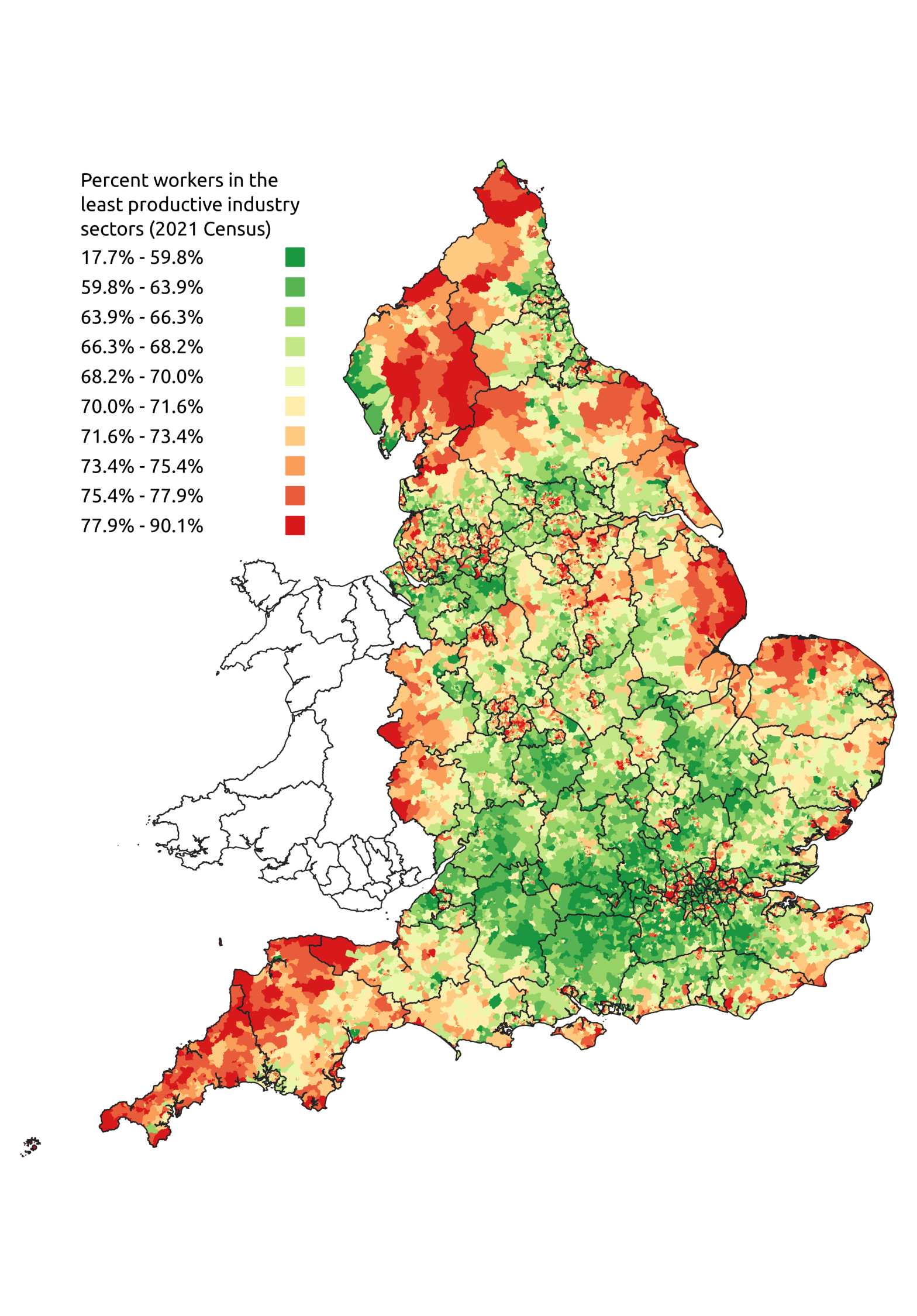
The idea that socio-economic inequalities persist between the prosperous south of England and the historically industrial north shapes city-region policies that focus on driving national productivity and regional growth. Currently, England’s secondary cities, including those in the North, are characterised by significantly higher productivity performance than coastal and peripheral rural areas. Higher productivity is associated with higher incomes and lower unemployment.
The publication of the interim report of the Milburn Review into Young People and Work revealed a significant rise in young people being NEET (Not in Employment, Education, or Training). As with productivity, the distribution of benefit uptake among 16–24-year-olds reveals a greater core-periphery divide than a north-south one. The Youth Opportunity Index 2025 similarly finds no clear north-south divide with respect to the opportunities available to young people.
Importantly, being NEET is both a cause and a consequence of poor health with analysis of Scottish longitudinal data finding that NEET experiences were associated with a higher risk of poor physical and mental health after 10 and 20 years. The risk of depression and anxiety prescription for the NEET group was over 50% higher than that for the non-NEET group.
Adolescents living on the coast report more long-standing impairment, illness, or disability than those living inland. Children and young people in coastal areas are more likely to smoke, give birth aged under 17 and be admitted to hospital on an emergency basis for injuries, substance and alcohol use. Between 2019/20 and 2023/24, admission rates for self-harm per 10,000 for 0-14-year-olds were 10.5 in coastal areas, 8.8 in non-coastal areas (excluding London) and 4.2 in London.
Education is arguably the single most important modifiable social determinant of health inequality, predicting employment, income and access to material resources as well as psychosocial well-being and health behaviours. Attributing 2023-24 school-level data to Lower Super Output Areas (LSOAs), average GCSE (attainment 8) scores were 42.8 in coastal LSOAs, 46.1 in non-coastal LSOAs excluding London and 50.9 in London. Poor education performance may partly reflect low work expectations and, in turn, low levels of aspiration and self-esteem.
The current Government has announced several initiatives that will benefit economic renewal in coastal areas, including £1.1bn for green maritime infrastructure and the £360m Fishing and Coastal Growth Fund. Previous evidence suggests efforts to restructure the economy to green sectors or alternative industries are only likely to help regenerate coastal places if an ecosystem of related industries and services is built around these developments. Otherwise, the benefit to local economies is often limited.
Coastal regeneration may be better achieved by focusing on strategies that have led to economic, social and health renewal in other places: significant investment to infrastructure and connectivity in Northern cities has supported the restructuring of their economies to high productivity, high wage knowledge-intensive services such as IT and finance. Generous education funding as part of the London Challenge turned around failing schools in the capital, probably contributing to the extraordinary educational performance of children and young people in the capital compared to their coastal peers.